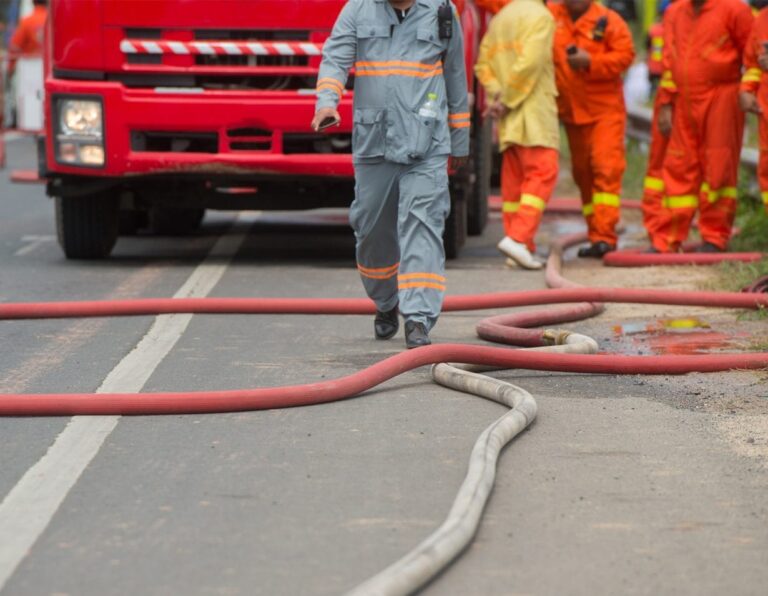
On the 3rd December 2020 we heard the devastating news that four people had died and another injured in a large explosion at the Wessex Water’s premises in Avonmouth, Bristol. The blast happened in a silo containing treated biosolids and was reported as a “very loud explosion” that “shook buildings”. Avon and Somerset Police reported that the explosion happened in a chemical tank at a water recycling centre and sadly, despite the best efforts of those involved in the rescue operation, there were fatalities.
Investigations into the circumstances of the blast are underway but the local public have been given reassurances that there is not believed to be any ongoing public concern. The families of those who died in this tragic accident have been contacted and support has been sent to the families, friends and colleagues of those involved.
How can Rothera Bray Personal Injury team help with fatal accident claims?
Dealing with the loss of a loved one is hard, however the Personal Injury and Clinical Negligence Team here at Rothera Bray Solicitors can offer support and assistance to those affected by this devastating accident, or other fatal accidents.
The Fatal Accidents Act 1976 (remedial order) 2020
If your partner or spouse is involved in a fatal accident, then you will be entitled to receive a bereavement award. Previously this was limited to only spouses of the deceased.
The Fatal Accidents Act 1976 (Remedial Order) 2020 has however seen a revision made to the granting of this award, which came into force from 6th October 2020. From this date, the eligibility for the bereavement award has been extended to include cohabitees. This means that if you are living with your partner and they are involved in a fatal accident, you will now be entitled to receive a bereavement award, the same as a spouse has been able to for many years 2020 (if it is the case that they have been cohabiting for over 2 years).
the changes came into effect from 6th October 2020. It is important to be aware, these changes will not be applied retrospectively and will only apply to deaths that occur after this date.
The Bereavement Award
A bereavement award is a payment of compensation awarded when an unfortunate error has led to the death of a loved one. Historically, this award was £12,980. This was however later increased, so that any deaths occurring on or after 1st May 2020 would attract an increased award of £15,120.
Who can make a claim for fatal accident compensation?
A claim for compensation can be brough either:
- By the “estate” of the deceased for the losses suffered by the deceased during his lifetime; and/or
- By the dependents of the deceased under the Fatal Accident Act 1976.
Often these groups of people are the same, that is, the spouse, children and/or parents of the deceased. The two pathways are not mutually exclusive and in most cases, a deceased’s next of kin will pursue both avenues of compensation at the same time.
Contact The Personal Injury team
We can assist those injured in this accident, or anyone injured in an accident that was not their fault, to obtain them the compensation they deserve.
For advice on Fatal Accidents, our experienced team act on a ‘No Win, No Fee’ basis. We’re ready to support you through and ensure you get you get the compensation you deserve, contact our Personal Injury team on enquiries@rotherabray.co.uk or call 03456 465 465.
We are members of the Association of Personal Injury Lawyers (APIL).