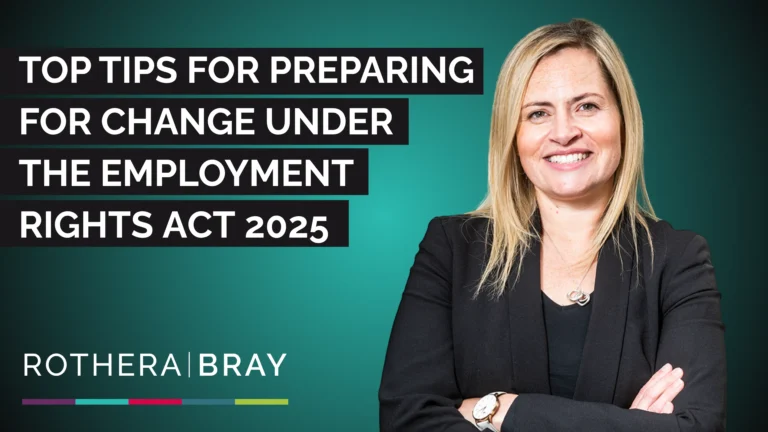
Employment Law Partner Natalie Abbott explains what the new requirements mean for employers and the practical steps organisations can take to support employees experiencing menopause.
Laying the foundations for effective menopause support
In my experience, many employers recognise the importance of supporting employees experiencing menopause but are often unsure where to start. The introduction of Equality Action Plans provides an opportunity to take a proactive approach and implement meaningful measures that can make a real difference to employees’ working lives.
A good starting point is listening to employees, training managers, reviewing workplace policies and considering practical adjustments that help individuals remain comfortable, supported and productive at work.
Understanding Equality Action Plans
Equality Action Plans will be required for employers with 250 or more employees. The plans will need to outline the support available to employees experiencing menopause and the steps being taken to address workplace barriers.
While publication is not expected to become mandatory until 2027, employers should consider preparing now to ensure any measures introduced are meaningful and effective.
Equality Action Plans should go beyond simply reporting statistics. They should identify the support employees need, highlight any barriers they face and set out how those issues will be addressed.
How does menopause affect employees in the workplace?
Experiences of menopause vary significantly. While some employees may experience few difficulties, others may be affected by symptoms such as fatigue, disrupted sleep, difficulty concentrating, anxiety and headaches.
Employers should also recognise that many employees may feel uncomfortable discussing menopause-related concerns due to worries about confidentiality, workplace perceptions or how their manager may respond.
One of the biggest challenges is that employees often don’t feel comfortable raising menopause-related concerns. Creating an environment where people can have open conversations is one of the most effective ways employers can provide support.
For some individuals, a lack of support can contribute to them leaving the workplace altogether, resulting in the loss of valuable experience and expertise.
Although menopause is not a protected characteristic under the Equality Act 2010, employers should be aware that inadequate support could lead to claims involving sex, age or disability discrimination.
In the case of Merchant v BT Plc, an employee was dismissed for poor performance. Prior to dismissal, she made her employer aware that her concentration was affected by menopause. Her employer didn’t consult occupational health or consider the medical position ahead of dismissing her and accepted that in other situations where ill-health issues were raised, such a referral would have been made. The employee was successful in claiming direct sex discrimination and unfair dismissal.
This case highlights the importance of taking menopause-related concerns seriously and ensuring managers are equipped to respond appropriately.
What steps should employers take now?
I would recommend that employers don’t wait until 2027 to start thinking about Equality Action Plans.
Consulting with employees through surveys, focus groups, staff networks or trade union representatives can help employers better understand the support people need and identify any barriers within the workplace.
Employers should also:
- Ensure employees have clear routes to raise concerns
.
- Review policies relating to sickness absence, flexible working and equality, diversity and inclusion
.
- Consider whether a dedicated menopause policy would be beneficial
.
- Provide managers with training on handling sensitive conversations
.
- Consider access to occupational health support
.
- Assess whether workplace adjustments, such as improved ventilation, rest areas or easier access to facilities, could help employees
.
The most effective menopause initiatives are usually those shaped by employee feedback rather than a one-size-fits-all approach.
Who is responsible for dealing with this?
Responsibility for Equality Action Plans often sits within HR teams. However, employers should consider taking a wider organisational approach if they want these plans to deliver meaningful change. Employee engagement can help embed cultural change far more effectively than initiatives that are developed solely at management level.
Looking ahead
The introduction of Equality Action Plans gives employers an opportunity to take a more structured approach to supporting employees experiencing menopause. I find that organisations that listen to employees, equip managers with the right skills and embed support into workplace culture are most likely to see long-term benefits for both their people and their business.
If your organisation employs 250 or more people, now is the time to review the support available to employees experiencing menopause and begin preparing for Equality Action Plans.
Our specialist Employment lawyers can advise on the upcoming requirements, review policies and procedures, provide training for managers and help you develop practical measures that support both your workforce and your business.
To discuss how these changes may affect your organisation, contact the team on 03456 465 465 or email enquiries@rotherabray.co.uk
Disclaimer: This blog is for information only and does not constitute legal advice. If you need legal advice, please contact us on 03456 465 465 or email enquiries@rotherabray.co.uk to get tailored advice specific to your circumstances from our qualified lawyers.